

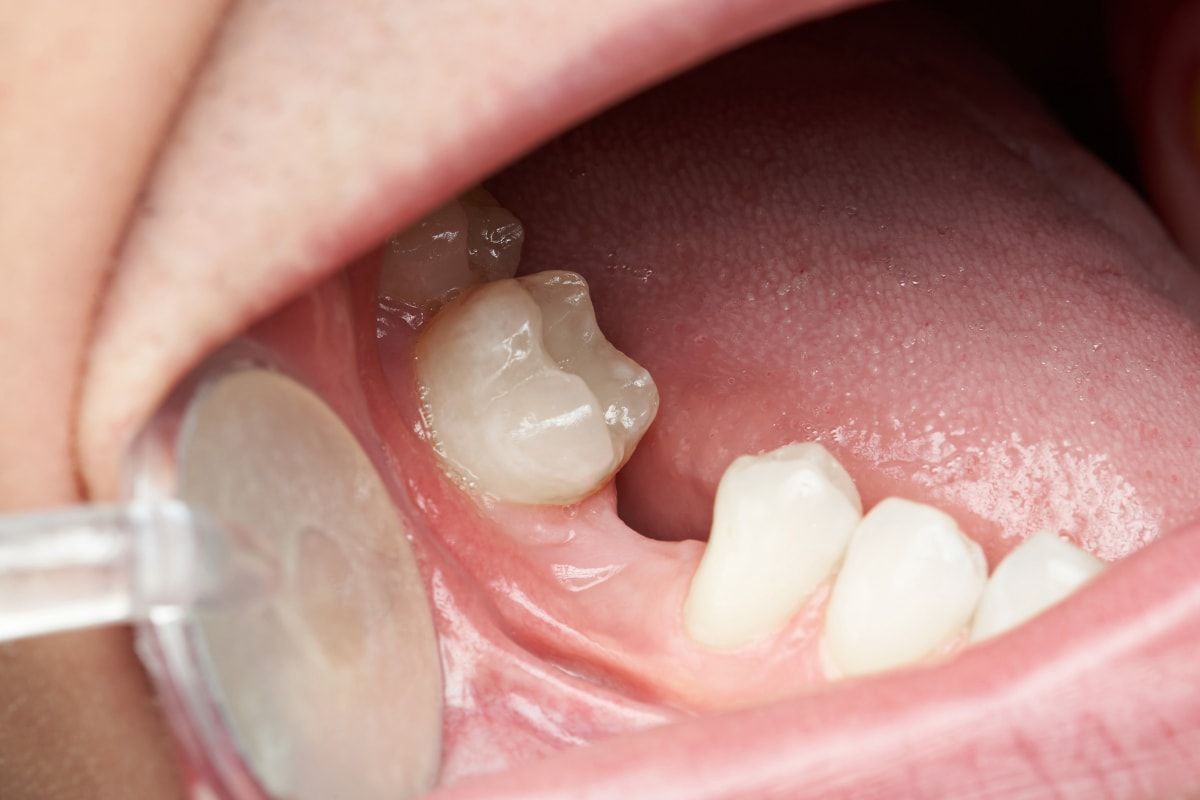
When considering missing teeth, many of us think about the aesthetic complications as being the main issue to resolve. However, a missing tooth has more significant associated complications such as bone resorption which can only be resolved with titanium dental implants.
What is resorption?
Resorption is the process by which the jawbone is reabsorbed by the body after a tooth is lost. Your teeth stimulate your jawbone and when a tooth is lost, the jawbone no longer receives this same level of stimulation and begins to shrink at a rate of 0.5-1% every year if left untreated. The only way to curb resorption is to have dental implants as opposed to dentures.
What is a dental implant?
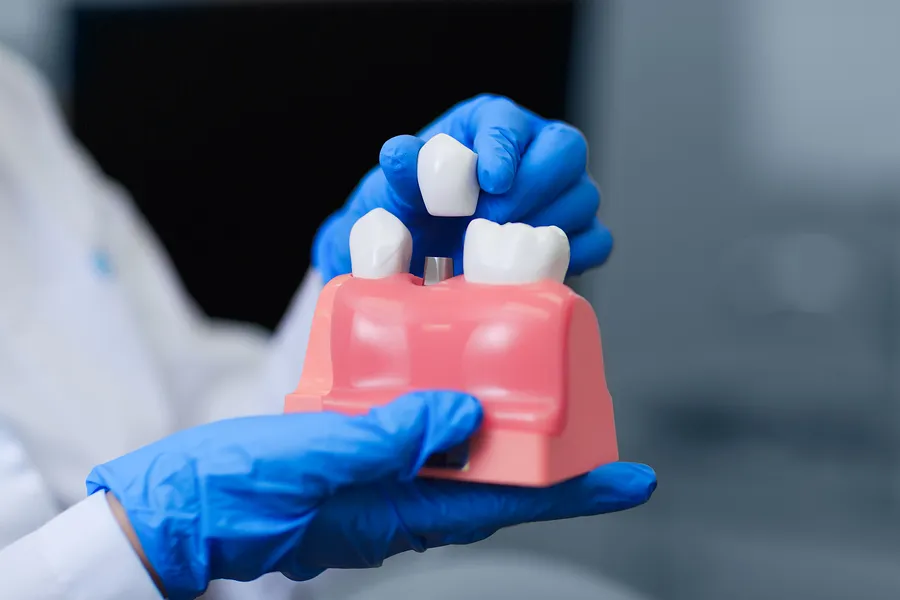
Dentures are a common way to replace missing teeth, restoring aesthetic however in the case of function, dentures can only achieve so much as they are a removable solution. Dental implants are surgically inserted into the jawbone and over a period of around 6 months, they are left to fuse with your jawbone, to become a permanent part of the body. A dental implant is made up of 3 parts; the titanium implant inserted into the jawbone, the restoration tooth-like part such as a crown and connecting abutment linking both the restoration and implant.
How do dental implants preserve bone?
As the jawbone disintegrates as a result of missing teeth, the shape of your mouth alters overtime which can affect the stability of prosthetics like bridges and dentures. Because of bone loss in the jaw, patients who have dentures may need new sets of dentures due to these changes. As dental implants mimic the function of a real tooth, the tissues in your jawbone grow around the implant and no such changes in the shape of the mouth (as described above) occur. As mentioned above, dental implants fuse with the jawbone via a unique process known as osseointergration, comparable to the way bone fuses to roots of teeth.
Dental implants and your confidence
Resorption causes the jawbone to shrink, as discussed above and this can dramatically change the aesthetic of a person’s face, making them appear old beyond their years. One of the biggest benefits of dental implants is their ability to reverse these changes, restoring confidence and day-to-day wellbeing.
If you would like to book an appointment with us, click here to fill out our easy-to-use online booking form. Alternatively, please give us a call and our team will be happy to find an appointment slot to suit you. We’re easy to find and close to the Deptford DLR station and Greenwich and St Johns train stations as well as several bus services.

Reviewed by Ricky Sardinha
Principal dentist, exclusive practice in orthodontics at SmileUp Dental. GDC 82734. Full profile